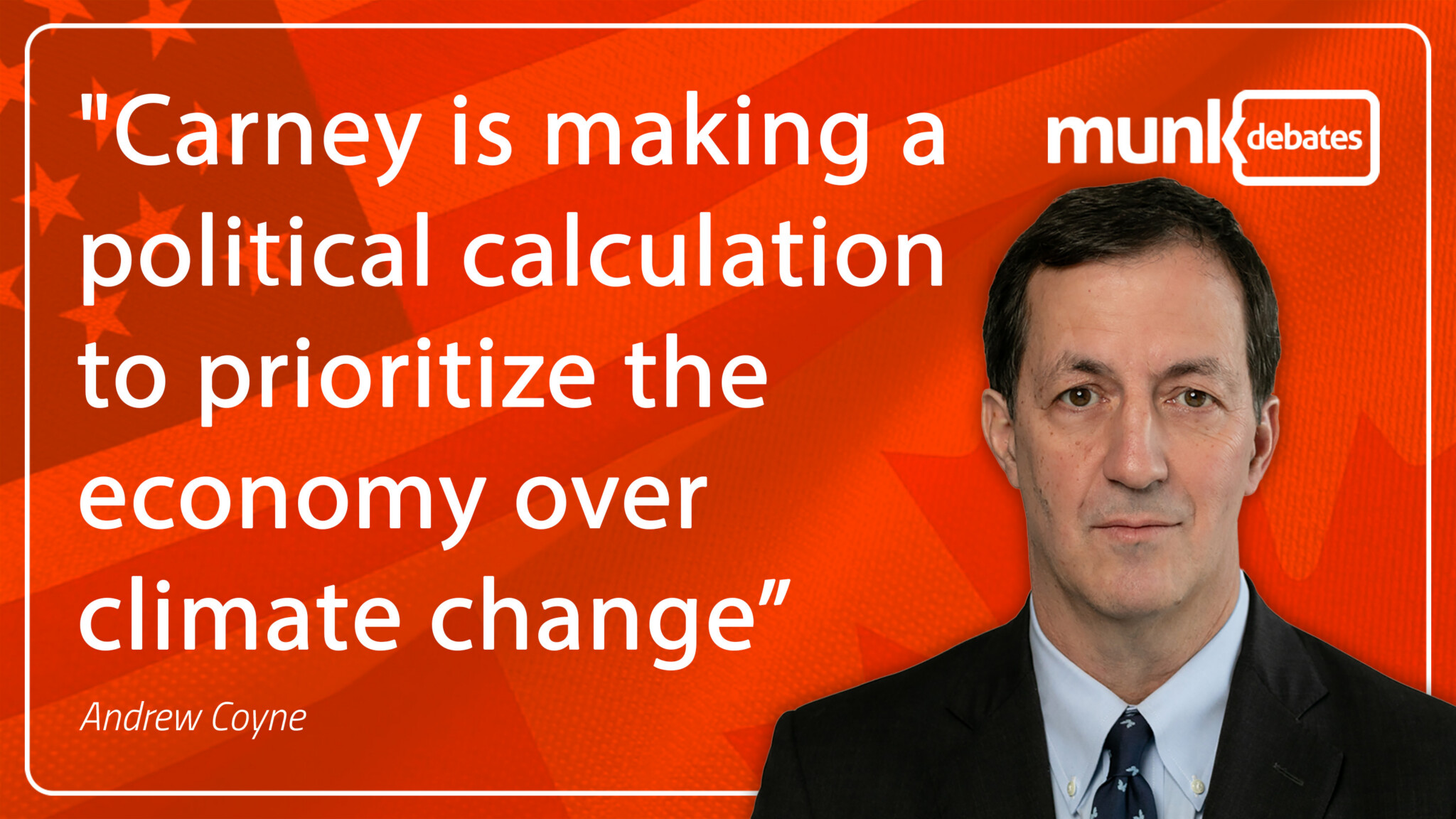
Munk Dialogue with Andrew Coyne: Canada’s two competing priorities and the new U.S. Fed Chair signals compliance with Trump
Programming Note: Friday Focus is taking a summer break. We will be back with new episodes starting September 11 (and, of course, if any significant geopolitical news breaks over the summer!).
Become a Munk Donor ($50 annually) to get 72-hour advanced access to full length editions of Munk Dialogues with Andrew Coyne. Your donor membership comes with other great perks like a livestream pass to our mainstage debates, access to our full back catalogue of debates and dialogues, and a $25 charitable tax receipt (for Canadian residents).
Andrew and Rudyard open the show by examining the competing priorities confronting Prime Minister Carney’s government. On one hand is the immediate geopolitical imperative: reducing Canada’s dependence on a U.S. trading partner that President Trump has shown a willingness to weaponize, making export diversification an urgent national priority. On the other is the growing threat of climate change, underscored by devastating wildfires in Canada and across Europe. Carney appears to have concluded that geopolitical security must come first, pushing climate policy down the agenda. But can he do so without alienating a significant portion of the Liberal coalition, for whom climate action remains a defining issue?
In the second half of the show, Andrew and Rudyard turn to new U.S. Federal Reserve Chair Kevin Warsh’s first significant decision: keeping interest rates unchanged for a seventh consecutive month. Markets reacted sharply, with investors selling off 30-year Treasury bonds and pushing yields to a 19-year high. While former Fed Chair Jerome Powell won praise for defending the Fed’s independence in the face of pressure from President Trump, Warsh’s decision has reinforced critics’ fears that he is too closely aligned with the White House. Has the Federal Reserve begun to sacrifice its independence—or is Wall Street overreacting?
You may also like
June 23, 2026
– Listen
Munk Dialogue with Andrew Coyne: Trump loses his bargaining power and has Mark Carney’s “elbows up” promise delivered?
August 14, 2026
– Listen
Munk Dialogue with Andrew Coyne: the Canada-US trade deadline looms and Iran calls Trump’s bluff
July 3, 2026
– Listen
Munk Dialogue with Andrew Coyne: the American experiment at 250 and Canada’s pipeline gamble
August 21, 2026
– Listen
Munk Dialogue with Andrew Coyne: how far is Carney willing to bend for Trump?
August 28, 2026
– Listen
Munk Dialogue with Andrew Coyne: Is Canada prepared for the long fight?
July 24, 2026
– Listen
Munk Dialogue with Andrew Coyne: Trump doubles down on the Iran war and tariffs, and an AI model escapes the lab
August 7, 2026
– Listen
Munk Dialogue with Andrew Coyne: Carney considers concessions to Trump as U.S. Power wanes abroad
July 10, 2026
– Listen
Munk Dialogue with Andrew Coyne: the Iran-U.S. ceasefire unravels and Alberta pulls ahead while Ontario and Quebec fall behind
August 25, 2026
– Listen
Special Munk Dialogue with Andrew Coyne: Carney walks away from Trump and turns his Davos speech into action
July 17, 2026