Munk Dialogue with Andrew Coyne: Carney considers concessions to Trump as U.S. Power wanes abroad
Programming Note: Friday Focus is taking a summer break. We will be back with new episodes starting September 11 (and, of course, if any significant geopolitical news breaks over the summer!).
Become a Munk Donor ($50 annually) to get 72-hour advanced access to full length editions of Munk Dialogues with Andrew Coyne. Your donor membership comes with other great perks like a livestream pass to our mainstage debates, access to our full back catalogue of debates and dialogues, and a $25 charitable tax receipt (for Canadian residents).
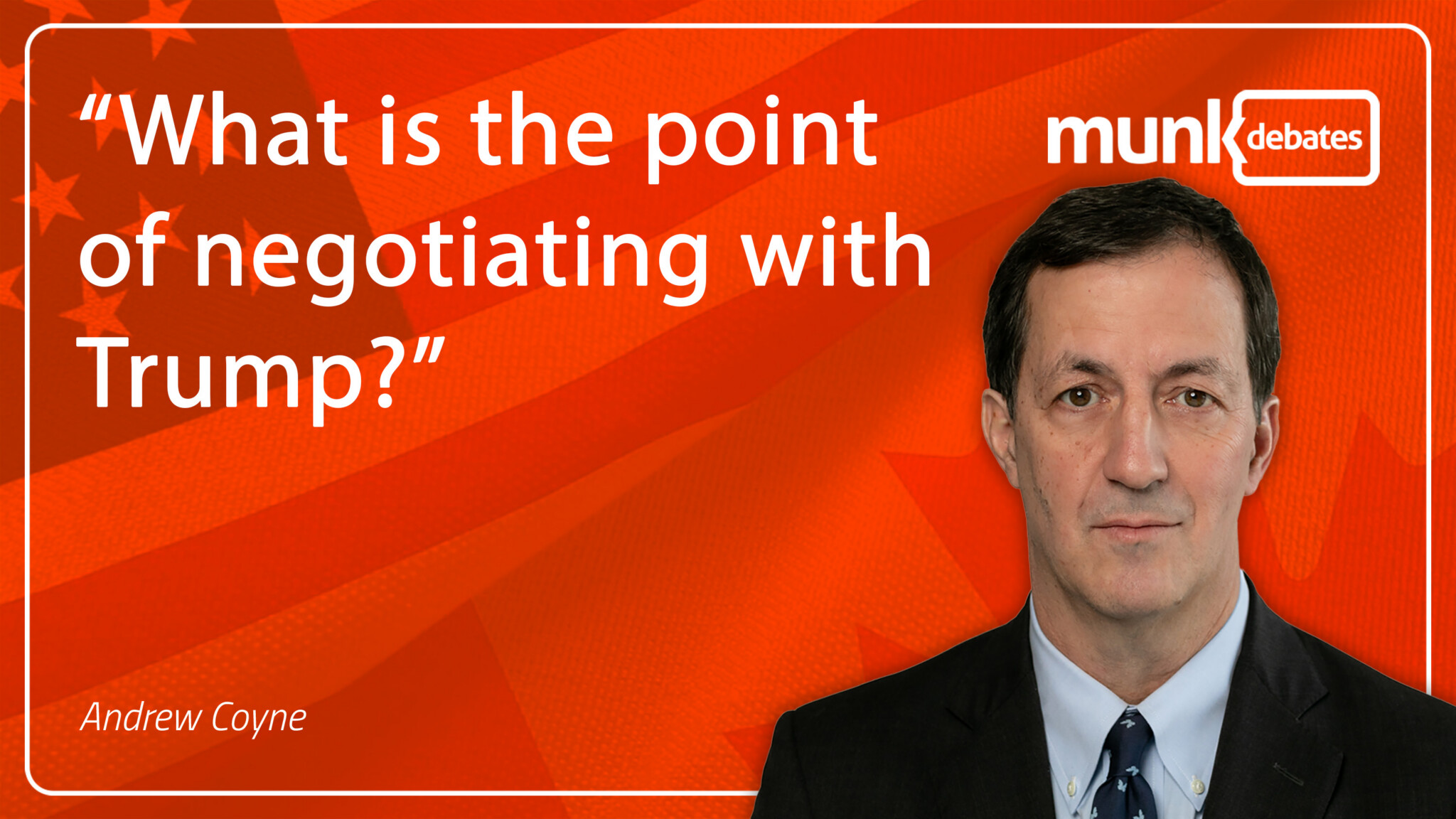
What is the point of negotiating with Donald Trump when experience suggests that agreements may not be binding, concessions may not be reciprocal, and terms may not be honoured? Reports now suggest the Canadian government is preparing to make significant concessions, including allowing more American dairy into the Canadian market. But in this climate, and with this president, any Canadian concession should come with a concession of equal value from Washington. So what exactly is Ottawa’s strategy? Are its conflicting signals a deliberate effort at strategic ambiguity—or evidence that the government itself is divided? And how might Trump’s negotiating posture change if Republicans lose the U.S. midterms in November and he becomes a lame-duck president?
In the second half of the show, Rudyard and Andrew turn to the emerging Oman-Iran agreement over control of the Strait of Hormuz, asking whether it signals a retreat from freedom of navigation and another step in the decline of American power abroad. They argue that Trump fundamentally misunderstood the Iranian regime he was confronting and the retaliatory tools at its disposal. The result, they contend, is more than a strategic defeat: it is a humiliation for the United States.

You may also like
July 24, 2026
– Listen
Munk Dialogue with Andrew Coyne: Trump doubles down on the Iran war and tariffs, and an AI model escapes the lab
July 10, 2026
– Listen
Munk Dialogue with Andrew Coyne: the Iran-U.S. ceasefire unravels and Alberta pulls ahead while Ontario and Quebec fall behind
August 14, 2026
– Listen
Munk Dialogue with Andrew Coyne: the Canada-US trade deadline looms and Iran calls Trump’s bluff
July 31, 2026
– Listen
Munk Dialogue with Andrew Coyne: Canada’s two competing priorities and the new U.S. Fed Chair signals compliance with Trump
August 28, 2026
– Listen
Munk Dialogue with Andrew Coyne: Is Canada prepared for the long fight?
September 16, 2026
– Listen
Munk Dialogue with Andrew Coyne: Carney opens Canada for business and courts a new European alliance
August 21, 2026
– Listen
Munk Dialogue with Andrew Coyne: how far is Carney willing to bend for Trump?
July 17, 2026
– Listen
Munk Dialogue with Andrew Coyne: Trump undermines his own party and the crisis of Canadian conservatism
July 3, 2026
– Listen
Munk Dialogue with Andrew Coyne: the American experiment at 250 and Canada’s pipeline gamble
August 25, 2026